4 months ago
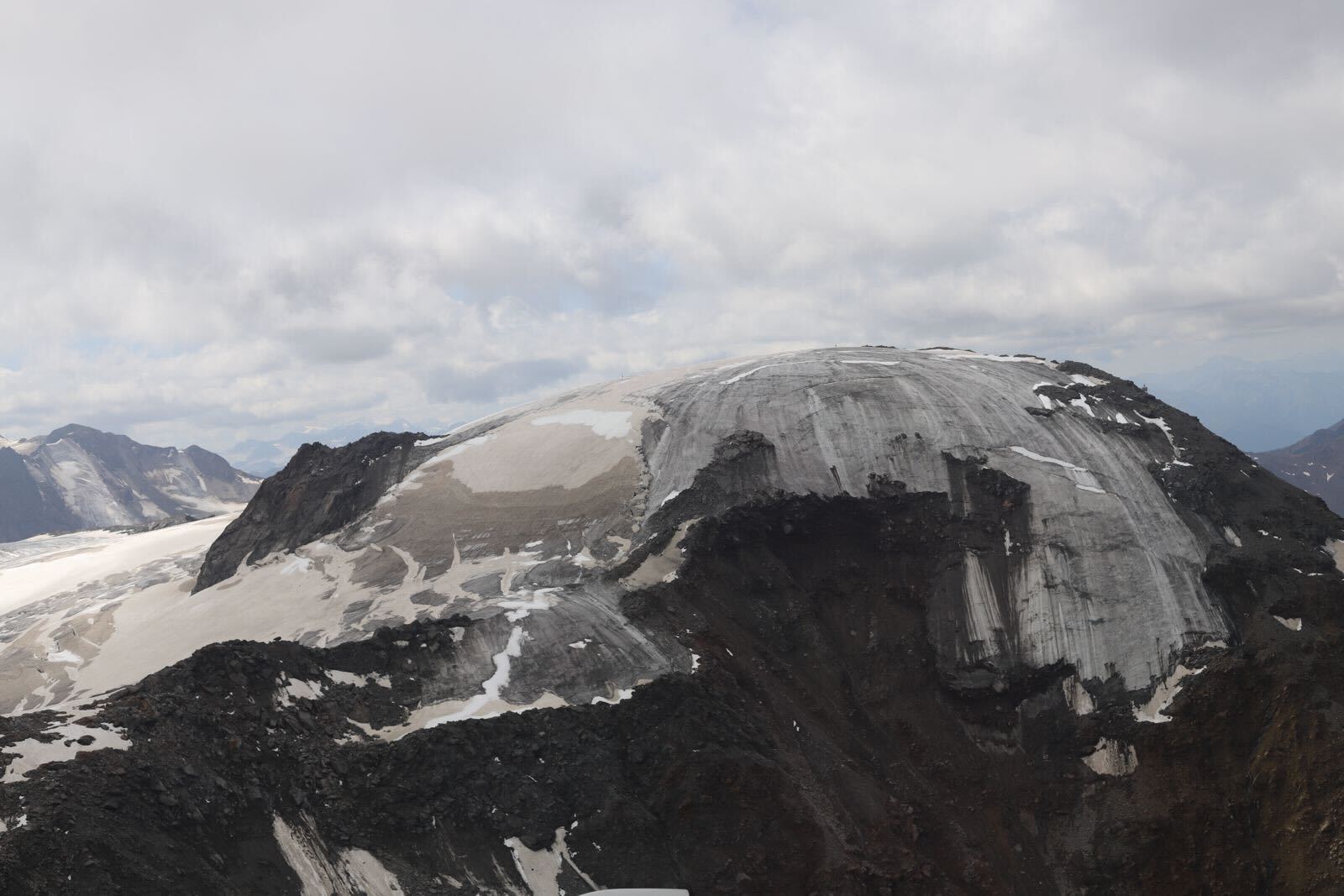
High up in the Ötztal Alps, near the border of Austria and Italy, sprawls the closest thing you can get — scientifically, at least — to a time machine. For thousands of years, snow has fallen here and turned to ice, building layer upon layer of the Weißseespitze glacier and archiving invaluable information. For instance, as mining and smelting of metals accelerated 1,000 years ago across Europe, pollutants like arsenic took to the air and fell on the ice. There are natural signatures, too, like chemicals from wildfires that give clues to the climate of the distant past.
Scientists are raising the alarm that as glaciers disappear, they’re taking critical insights with them. Already, warmer temperatures have taken their toll on the Weißseespitze glacier, as the upper layers — corresponding to the centuries since the 1600s — have melted away. What researchers are left with is a historical record between the second and 17th centuries CE. And the race is on: Some 30 percent of the glaciers in the Ötztal Alps could disappear in the next five years.
“It’s really a race against time, because we have this unique opportunity to inspect the memory of this glacier,” said Azzurra Spagnesi, a paleoclimatologist at the University Ca’ Foscari of Venice and lead author of a recent paper that analyzed the record of pollutants preserved in Weißseespitze’s ice.
Think of Weißseespitze — or any glacier — as a layer cake. As snow falls on the glacier, it brings along whatever compounds are in the air at that time. All that snow steadily compacts into ice, year after year. To interrogate the timeline held within the glacier, Spagnesi’s colleagues drilled down more than 30 feet until they hit bedrock, dragging up a core. The farther down a layer of ice is in the core, the older the frozen water and its component pollutants — a sort of time-cake, if you will.
Being in the middle of densely-populated Europe — the birthplace of the Industrial Revolution — Weißseespitze and its neighboring glaciers contain higher-resolution information compared to ice cores taken in more remote places, like Greenland and Antarctica. “These local glaciers are going to tell you more of what’s going on nearby,” said Paul Bierman, a geoscientist at the University of Vermont who wrote a book about the lessons contained in the history of the Greenland Ice Sheet. “So they’re both valuable — they’re just different.”
By analyzing those pollutants, researchers can get an idea of what was in the atmosphere — and by extension, what was going on in the world at any given moment in history. For instance, in the samples from Weißseespitze, Spagnesi and her team observed pollutants like lead from human activities even a millennium ago. “These peaks indicated human activity was already leaving a detectable mark on the atmosphere,” Spagnesi said.
The human-caused pollution in the Weißseespitze glacier has been chronic over the centuries. But the ice core also revealed acute levels of pollution from natural disasters, like major volcanic eruptions: Volcanoes release trace elements, including arsenic and copper, into the atmosphere, which float around and eventually fall out onto land. The researchers found spikes of such metals in the 13th and 16th centuries CE, suggesting some serious eruptions.
Spagnesi and her colleagues could also sniff out ancient climates based on the natural pollution they found in the core. In the layers around 1000 CE, they discovered spikes in levoglucosan, a chemical released when vegetation burns. This matched high levels of charcoal found in cores sampled from another nearby ecosystem: peatlands. Much like glaciers, these landscapes accumulate material year after year, only here instead of ice, it’s organic matter that piles up and resists decay. Together, the two samples from vastly different environments suggest an outbreak of wildfires, which coated the ice and peat in the signature components of smoke.
The underlying cause of these ancient fires may have been eerily similar to what we’re seeing today. The signals in the ice cores and peat correspond to a century-long drought, when bursts of rain would encourage the growth of vegetation, which would then desiccate and turn into wildfire fuel. We’re witnessing the same dynamic in places like the American West, where climate change is driving “weather whiplash” — years of plentiful rainfall followed by years of extreme drought.
This is why the race to take cores from disappearing glaciers is so urgent: The more information that scientists have about how glaciers and ice sheets responded to climatic shifts in previous centuries, the more accurate their calculations about modern-day climate change will get. “We need to pass to modelers precise information about changes in past atmospheric composition, and even environmental variability, to train the models,” Spagnesi said.
But Weißseespitze and other glaciers in the Alps are rapidly disappearing. Spagnesi’s colleagues took that 30-foot core in 2019, stopping at bedrock — but in 2025, another drilling in the area reached the bottom of the glacier after just 18 feet. With every lost inch, the available historical record inches back in time, until scientists are left with only the very distant past. They’re now scrambling to get more cores of what remains.
“Glaciers are not just ice,” Spagnesi said. “They are the archives of the Earth’s memory. And when they disappear, we don’t only lose frozen water, we lose irreplaceable knowledge about how our climate system works and how human activity has altered it.”