4 months ago
Introduction
In an era where social media dominates information dissemination, the rapid spread of scientific claims—both accurate and misleading—poses significant challenges. The democratization of content creation has empowered individuals worldwide to share knowledge instantly, but it has also facilitated the viral propagation of misinformation. This phenomenon has profound implications for public health, policy-making, and societal trust in science. The consequences of unchecked misinformation can be severe, ranging from vaccine hesitancy to climate change denial, which ultimately hinder efforts to address critical global issues.
On March 18, 2026, the conversation around combating misinformation took a pivotal turn with the increasing adoption of advanced artificial intelligence (AI) tools designed specifically to verify scientific claims circulating on social media platforms. These tools aim to bridge the gap between complex scientific data and public comprehension, ensuring that users receive reliable, evidence-based information. By leveraging cutting-edge AI technologies, these systems promise to transform how we interact with scientific content online, fostering a more informed and discerning digital community.
Context: The Misinformation Challenge on Social Media
Social media platforms have become primary sources of news and information for billions globally. However, the algorithms that prioritize engagement often amplify sensational or controversial content, regardless of its accuracy. Scientific misinformation, ranging from health myths to climate change denial, can spread rapidly, influencing public opinion and behavior detrimentally. The viral nature of social media means that false or misleading scientific claims can reach millions within hours, outpacing efforts to correct them.
Traditional fact-checking organizations, while valuable, struggle to keep pace with the volume and velocity of content generated daily. Moreover, the nuanced nature of scientific discourse—often laden with technical jargon and evolving evidence—makes verification complex and time-consuming. Fact-checkers must interpret studies, assess methodologies, and understand context, tasks that require expertise and cannot be scaled easily to the vast amount of information circulating online.
Additionally, the rise of echo chambers and confirmation bias on social media platforms exacerbates the problem. Users tend to engage with content that aligns with their preexisting beliefs, making it harder for corrective information to penetrate these networks. This dynamic underscores the urgent need for automated, scalable solutions that can provide timely and accurate verification of scientific claims.
The Core: AI Tools for Scientific Claim Verification
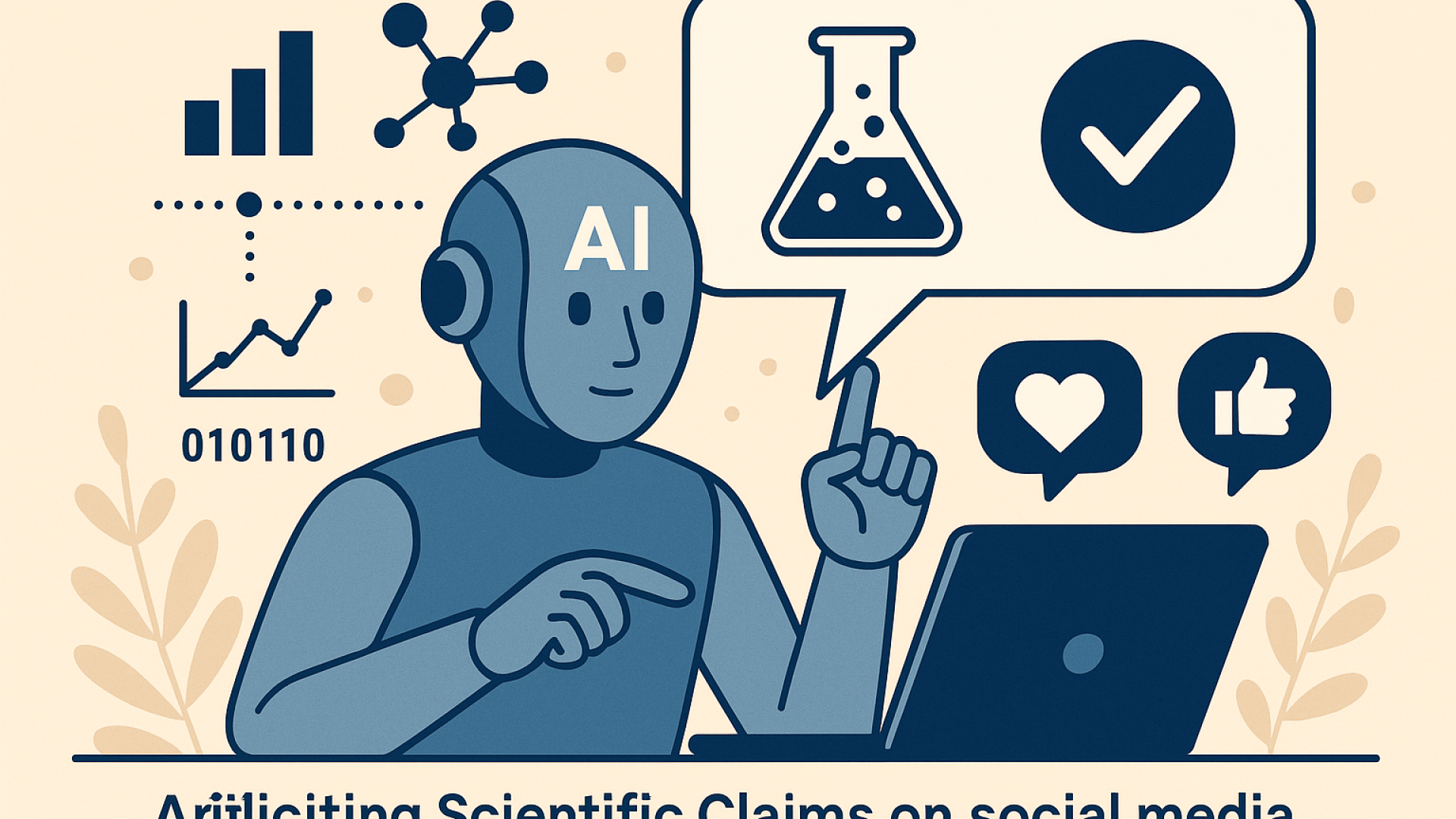
Recent advancements in AI, particularly in natural language processing (NLP) and machine learning, have paved the way for tools capable of analyzing and verifying scientific claims in real-time. These AI systems operate by cross-referencing claims against vast databases of peer-reviewed literature, reputable scientific repositories, and verified data sources. By automating the initial stages of verification, AI can dramatically increase the speed and scale at which scientific claims are assessed.
- How AI Verification Works: When a user encounters a scientific claim on social media, the AI tool parses the text to identify key assertions. It then searches relevant scientific databases for corroborating or contradicting evidence. The tool assesses the credibility of sources, the consensus within the scientific community, and the context of the claim. Advanced models can also evaluate the methodology and statistical significance of referenced studies, providing a nuanced assessment rather than a simple true/false verdict.
- Integration with Social Platforms: Some AI verification tools are being integrated directly into social media interfaces, providing users with instant feedback on the reliability of scientific statements. This integration helps users make informed decisions before sharing or acting on information. Features such as pop-up alerts, credibility scores, and links to detailed explanations empower users to critically evaluate content in real time.
- Transparency and Explainability: To build trust, these AI systems offer explanations for their assessments, citing sources and summarizing evidence. This transparency is crucial to counter skepticism about automated fact-checking. By providing clear rationales and access to original research, AI tools foster user confidence and encourage deeper engagement with scientific material.
Benefits and Opportunities
The deployment of AI tools for verifying scientific claims offers multiple benefits that extend beyond merely flagging misinformation. These advantages contribute to a healthier information ecosystem and support the broader goals of science communication.
- Enhanced Public Understanding: By providing accessible, evidence-based evaluations, AI tools help demystify complex scientific topics for the general public. They translate technical jargon into clear language, making science more approachable and understandable.
- Mitigation of Misinformation Spread: Early detection and flagging of dubious claims can reduce their viral potential, limiting harm caused by false information. This proactive approach helps prevent misinformation from embedding itself in public discourse.
- Support for Educators and Journalists: These tools serve as valuable resources for professionals who require quick, reliable verification to inform their work. Educators can use AI assessments to guide curriculum development, while journalists can fact-check sources efficiently, enhancing the quality of science reporting.
- Promotion of Scientific Literacy: Encouraging critical thinking and skepticism, AI verification fosters a culture of inquiry and informed discourse. By exposing users to evidence-based reasoning, these tools contribute to long-term improvements in public scientific literacy.
- Scalability and Efficiency: AI systems can process vast amounts of data rapidly, enabling verification at a scale unattainable by human fact-checkers alone. This scalability is essential given the exponential growth of online content.
Challenges and Ethical Considerations
Despite their promise, AI verification tools face several challenges that must be addressed to ensure their effectiveness and ethical deployment.
- Data Limitations: Scientific knowledge is continually evolving, and databases may not always reflect the latest research, leading to potential inaccuracies. AI tools must be regularly updated to incorporate new findings and retract outdated or disproven information.
- Bias and Algorithmic Transparency: AI systems can inherit biases from training data, affecting their judgments. Ensuring fairness and transparency is essential to prevent the reinforcement of existing prejudices or the marginalization of certain scientific perspectives.
- Privacy Concerns: Integrating AI tools with social media platforms raises questions about user data privacy and consent. Developers must implement robust safeguards to protect personal information and comply with data protection regulations.
- Resistance and Trust Issues: Some users may distrust AI assessments, especially if they conflict with personal beliefs or ideological positions. Overcoming skepticism requires transparent communication about AI capabilities and limitations, as well as fostering human oversight.
- Contextual Nuance: Scientific claims often depend on context, such as study design, population, and limitations. AI tools may struggle to fully capture these nuances, risking oversimplification or misinterpretation.
Solutions and Future Directions
Addressing these challenges requires a multifaceted approach involving technological innovation, policy development, and public engagement.
- Continuous Updating of Databases: Collaborations between AI developers and scientific institutions can ensure databases remain current and comprehensive. Establishing standardized protocols for data integration will enhance reliability.
- Algorithm Auditing and Transparency: Regular independent audits and open reporting on AI decision-making processes can enhance trust and accountability. Publishing methodologies and performance metrics allows stakeholders to evaluate system effectiveness.
- User Education: Promoting digital literacy and educating users about the capabilities and limitations of AI verification tools can improve acceptance. Educational campaigns can empower users to critically assess information sources.
- Privacy Safeguards: Implementing robust data protection measures and clear user consent protocols is vital. Transparency about data usage and options for user control will build confidence.
- Human-AI Collaboration: Combining AI efficiency with human expertise can optimize verification accuracy and contextual understanding. Expert review can complement automated assessments, especially for complex or contentious claims.
- Multilingual and Cross-Cultural Adaptation: Expanding AI verification tools to support multiple languages and cultural contexts will increase global accessibility and relevance.
- Policy and Regulatory Frameworks: Governments and international bodies can develop guidelines to govern the ethical use of AI in misinformation mitigation, balancing innovation with rights protection.
Conclusion
The rise of AI tools to verify scientific claims on social media marks a significant advancement in the fight against misinformation. While challenges remain, the integration of these technologies offers a promising pathway to enhance public discourse, promote scientific literacy, and safeguard societal well-being. As we navigate the complexities of the digital information landscape, embracing innovative solutions like AI verification is essential to fostering a more informed and resilient global community.
As these tools continue to evolve, ongoing collaboration among scientists, technologists, policymakers, and the public will be crucial to harness their full potential responsibly and ethically. By combining technological innovation with human judgment and ethical oversight, we can build a future where truth and science thrive in the digital age, empowering individuals to make decisions grounded in reliable knowledge.